

記事: Waterproof vs Water-Resistant Bags: What to Check Before You Buy
Waterproof vs Water-Resistant Bags: What to Check Before You Buy
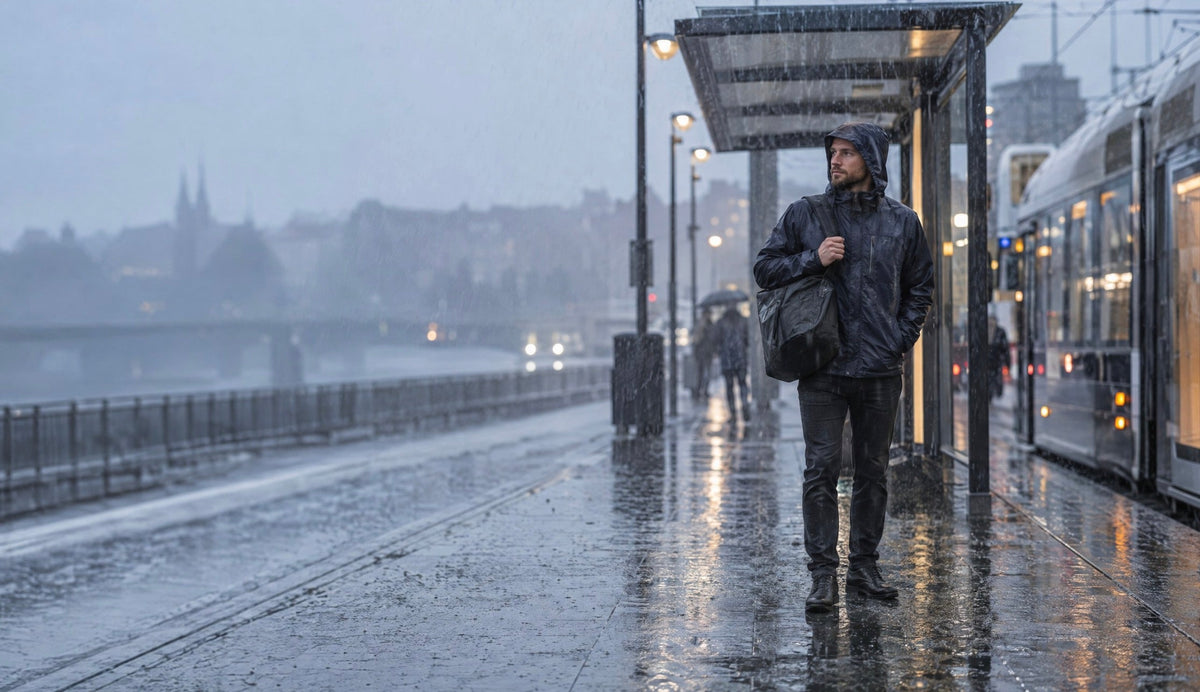
When rain begins halfway through a commute, a ride or a station transfer, a bag label can sound more decisive than it is. “Waterproof” and “water-resistant” are useful starting words, but they do not answer every practical question on their own. Assess the product-specific construction, closure, care guidance, intended use and any published ratings. That approach helps a commuter protect work essentials, a cyclist plan for road spray, a traveller pack with more intention, and an outdoor photographer separate weather exposure from equipment protection.
Start with the water you actually expect
A bag encounters water in different ways. A brief walk through light rain is not the same as a long ride in steady rain, a wet platform, a luggage hold, a muddy trail or a camera session beside surf. Think about duration, direction and pressure: water can fall from above, blow sideways, collect beneath a bag or be driven into seams and openings by motion. The right question is not “Which label wins?” but “What exposure is this model designed and documented to address?”
A practical first question
- For a commuter, consider how long the bag remains outside and whether it may sit on wet pavement or a train floor.
- For a cyclist, account for wheel spray, vibration, access while stopped and the bag’s position on the bike.
- For a traveller, consider repeated handling, transfers, weather changes and whether a dry place is available to repack.
- For a photographer, distinguish a protective carrying bag from the additional protection required for cameras, lenses, batteries and memory cards.
Write down the most demanding realistic moment rather than the most dramatic imaginable one. This makes it easier to compare a daily carry bag with a specialised bike bag or field bag on purpose, not on wording alone.
Inspect construction before the fabric headline
A fabric may shed water well while the bag’s seams, joins, pockets or hardware become the more relevant routes for moisture. Read the construction description closely. Look for how panels are joined, whether seams are described as welded or taped, where sewn sections appear, and how exterior pockets, attachment points and reinforcing panels meet the main compartment. These are comparison points, not a promise that every part of a bag behaves identically.
- Seam method: Find out whether the main compartment’s seams are welded, taped, stitched or a combination.
- Openings and pockets: Identify which compartments are intended for weather exposure and which have a different closure or construction.
- Mounting and abrasion zones: For bicycle bags, inspect the stated mounting method and the areas likely to rub against a frame, saddle or straps.
- Interior organisation: A pocket system can be useful, but it may introduce openings that deserve separate attention.
Construction details help you compare products that may use similar marketing language but have different designs.
Treat the closure as part of the weather system
The closure is often the moment where a good material meets real-world use. A roll-top, flap, zip or drawcord can each work differently depending on how it is closed, the load inside, the orientation of the bag and the manufacturer’s instructions. A water-resistant zipper, for example, is one component; it does not by itself describe the weather protection of the whole bag.
- Read the closing steps in the product documentation before choosing the bag.
- Check whether the closure needs a certain amount of free material to roll, fold or seat correctly when the bag is full.
- Ask whether you will open the main compartment frequently while exposed to rain; convenient access and a more protective closure can require different habits.
- Before leaving, close the bag carefully and stow delicate electronics in an additional protective case when the consequences of moisture are high.
Use published ratings with their test context
A published rating can make comparison more disciplined, provided it is read in context. The IEC IP code grades enclosure resistance to solids and liquids, and its second digit concerns liquids. That structure can be useful when a manufacturer publishes an IP rating for a product, but it is not the entire buying decision. It does not replace checking the closure, use instructions, condition of the bag and the kind of exposure you expect.
Consumers should read manufacturer documentation because a rating and its test conditions need to be understood for that model. Confirm exactly which product or configuration the statement covers, how the closure was meant to be set, and whether accessories, external pockets or mounted use are addressed. Avoid turning a code or an advertising label into a claim about every journey, every component or every way of packing. Compare the complete, current product page rather than relying on an isolated rating in a search result.
Care is part of the purchase decision
A bag’s weather-management design is not static. Dirt in a closure, grit along a fold, worn material, a damaged seam or a poorly secured mounting strap can change how you should use it. Before buying, find the manufacturer’s product-specific care guidance and decide whether that routine fits your life. If you cycle daily, rinse off road grime when appropriate; if you travel, allow the bag to dry before long-term storage; if you photograph outdoors, check the bag before putting sensitive equipment inside.

- Inspect the main closure, seams and stress points after demanding trips or rides.
- Follow the maker’s cleaning, drying and storage instructions rather than applying a generic treatment.
- Do not assume an exterior pocket has the same protection as the main compartment without documentation.
- Keep a lightweight protective pouch for items whose loss or water damage would be especially disruptive.
Make the choice by role, not by a single word
Commuter
Prioritise a closure you can operate reliably in a hurry, a size that leaves room to close it as instructed, and protection appropriate to the length of your outdoor commute. Think about where the bag will be placed after arrival.
Cyclist
Start with the intended mounting location, clearance and the manufacturer’s fitting guidance. Then consider spray exposure, access to repair items and whether the load may shift on uneven surfaces. Do not presume a frame or saddle bag fits every bicycle; measure and check the product documentation.
Traveller
Balance weather exposure with organisation and handoff points. A bag that is easy to close and inspect can be valuable during fast transfers, while a separate inner pouch can add a sensible layer for documents or electronics.
Outdoor photographer
Plan for the bag and the camera system as separate decisions. Check the bag’s published use and care guidance, then choose inserts, cases and packing practices suited to the equipment and conditions. Open the bag under cover when possible.
Gear for this guide
Use the current product pages to compare construction, capacity, closure and care information for your specific use case:
- PROJECT 8020 Waterproof Backpack for a larger roll-top carry option;
- PROJECT M23 Waterproof Field Bag for a compact field-bag option;
- PROJECT F01 Waterproof Frame Bag for frame-triangle carry;
- PROJECT S01 Waterproof Saddle Bag for rear-bike carry.
A five-minute comparison checklist
- What water exposure will this bag realistically face?
- How is the main compartment constructed, and where are its openings?
- What exact closure process does the manufacturer specify?
- Is there a published rating, and have you read the documentation and test context for this model?
- Can you follow the care, inspection and packing routine the bag requires?
The most useful bag description is the one you can connect to evidence and to your day. Evaluate waterproof and water-resistant language alongside construction, closure, care guidance, intended use and published ratings. That gives you a clearer way to choose for a rain-soaked commute, a ride, a journey or a day of making photographs outdoors.


